G-link | Web service

G-link | Web service

Unified workflow platform for call-center operations

G-link is a web-based service designed to centralize the full operational cycle of call-center teams. The objective was to translate existing workflows into a structured, scalable MVP covering core functional needs. The project required a system-level approach combining UX logic, interface clarity, and high-density layouts suitable for professional environments.

G-link is a web-based service designed to centralize the full operational cycle of call-center teams. The objective was to translate existing workflows into a structured, scalable MVP covering core functional needs. The project required a system-level approach combining UX logic, interface clarity, and high-density layouts suitable for professional environments.

Client

Client

GIGALAB

GIGALAB

GIGALAB

Services

Services

UX/UI Design Prototyping UX Research

UX/UI Design Prototyping UX Research

UX/UI Design Prototyping UX Research

Industries

Industries

Call center services

Call center services

Call center services

Date

Date

March 2025

March 2025

March 2025

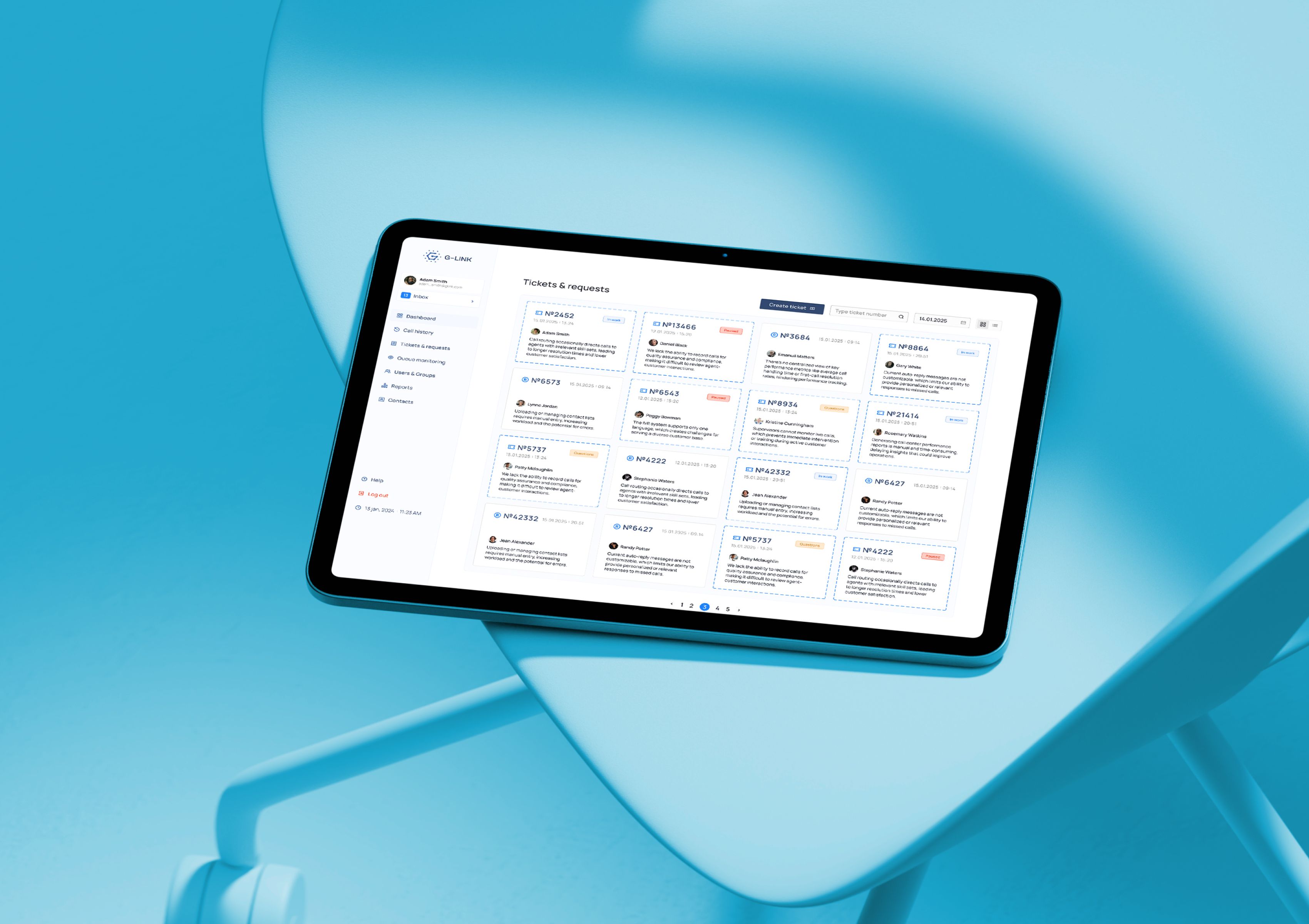
G-link tickets and requests interface displayed on a tablet mockup, showing a grid of ticket cards and navigation panel.

project in figures

project in figures

30+

30+

30+

30+

Screens

Screens

Screens

Screens

Interface volume

Interface volume

Interface volume

Interface volume

40+

40+

40+

40+

Modals

Modals

Modals

Modals

Interaction coverage

Interaction coverage

Interaction coverage

Interaction coverage

30+

30+

30+

30+

Flows

Flows

Flows

Flows

Flows tested

Flows tested

Flows tested

Flows tested

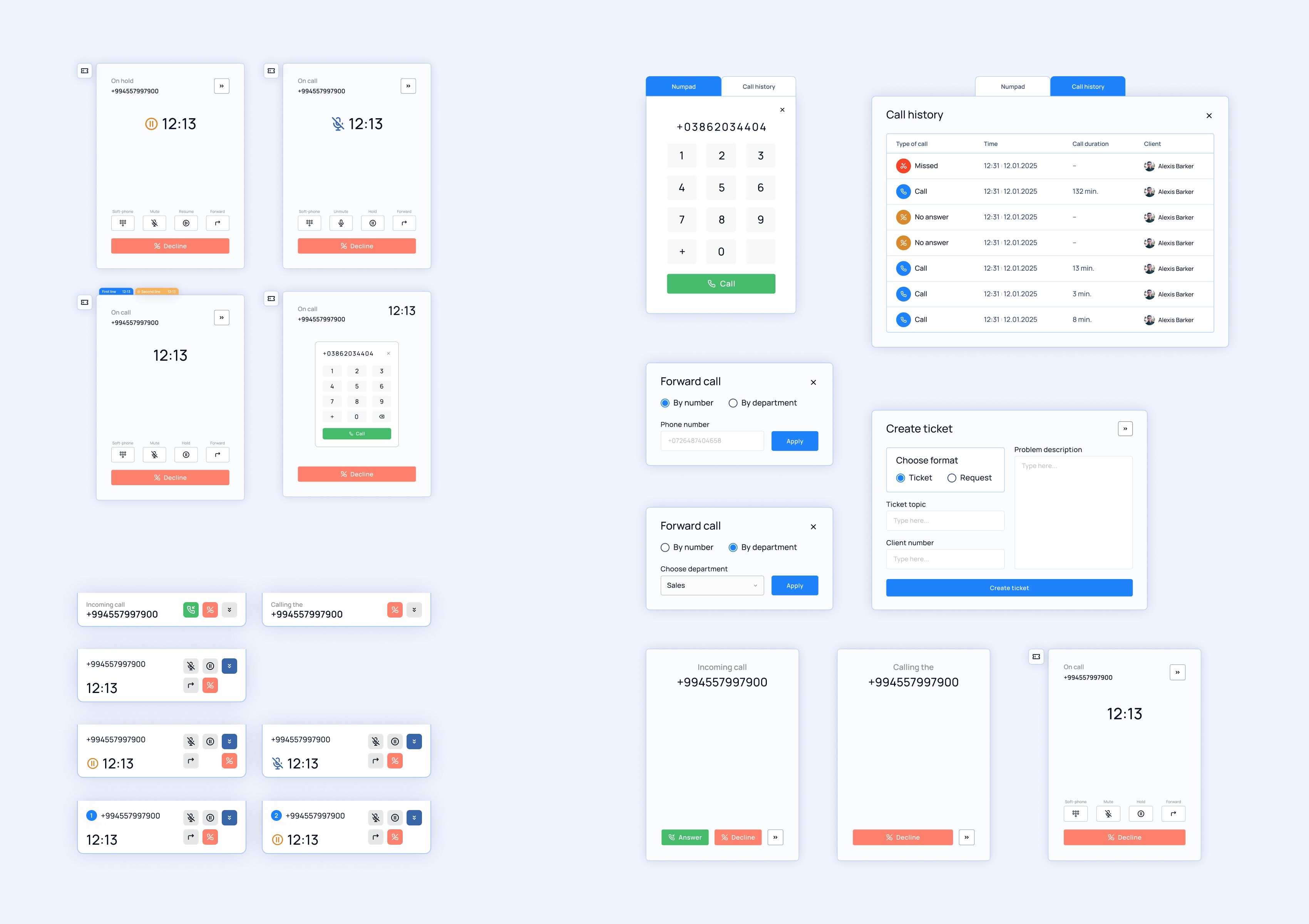
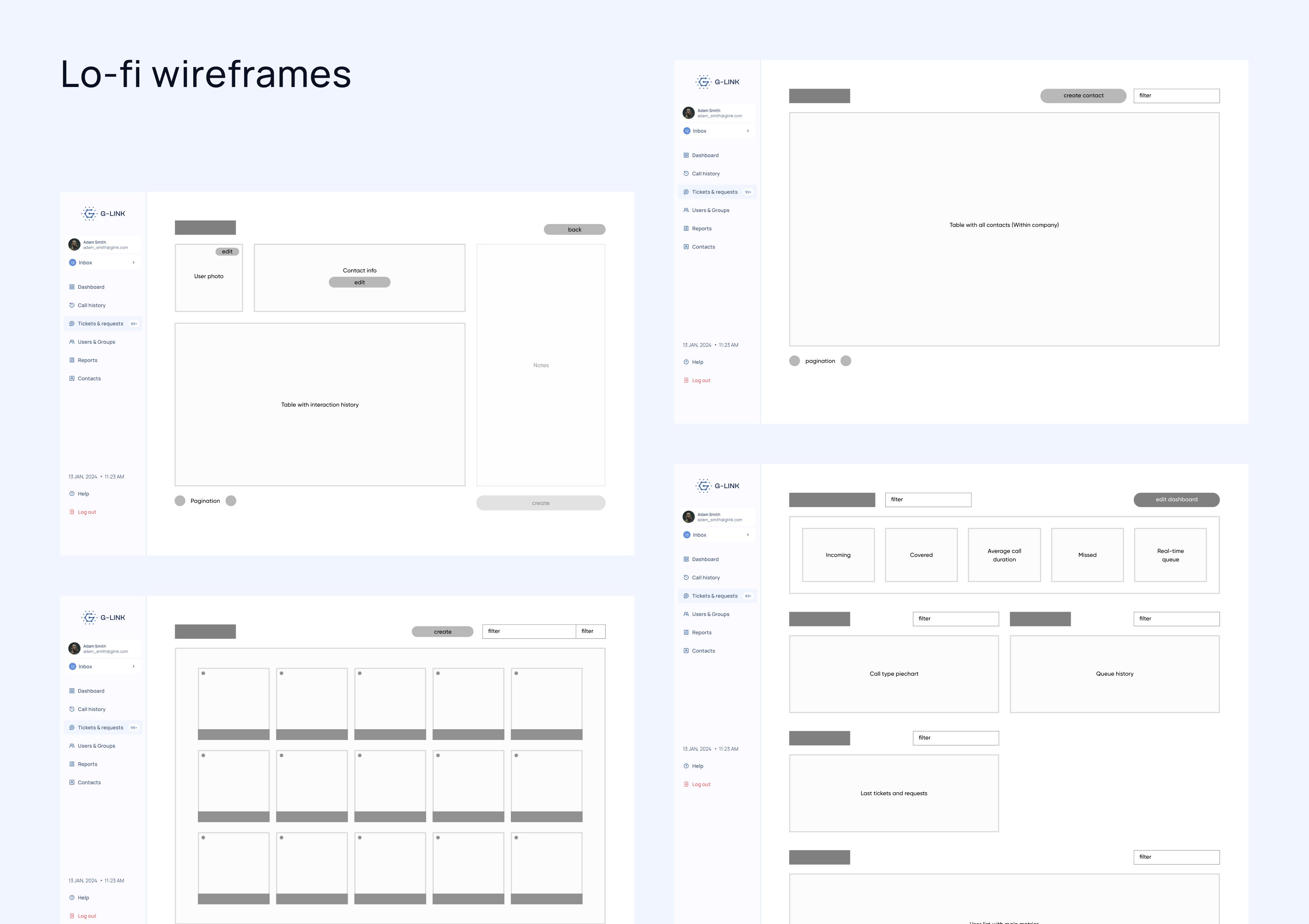
The work began with a detailed brief and stakeholder discussions, followed by the creation of a full user-flow architecture for all primary service structures. Once validated, the UX layer was built through low-fidelity wireframes covering all screens and modal interactions. After the UX framework was approved, the complete UI was developed — including screens, modal logic, and a dedicated soft-phone widget designed to support more than 20 operational states. The visual system focused on readability, interaction predictability, and alignment with typical call-center workflows. The final stage included developing a scalable design system and UI Kit, enabling consistent future expansion of the platform.

Low-fidelity wireframes of the G-link interface showing dashboard layouts, tables, filters, and content blocks.
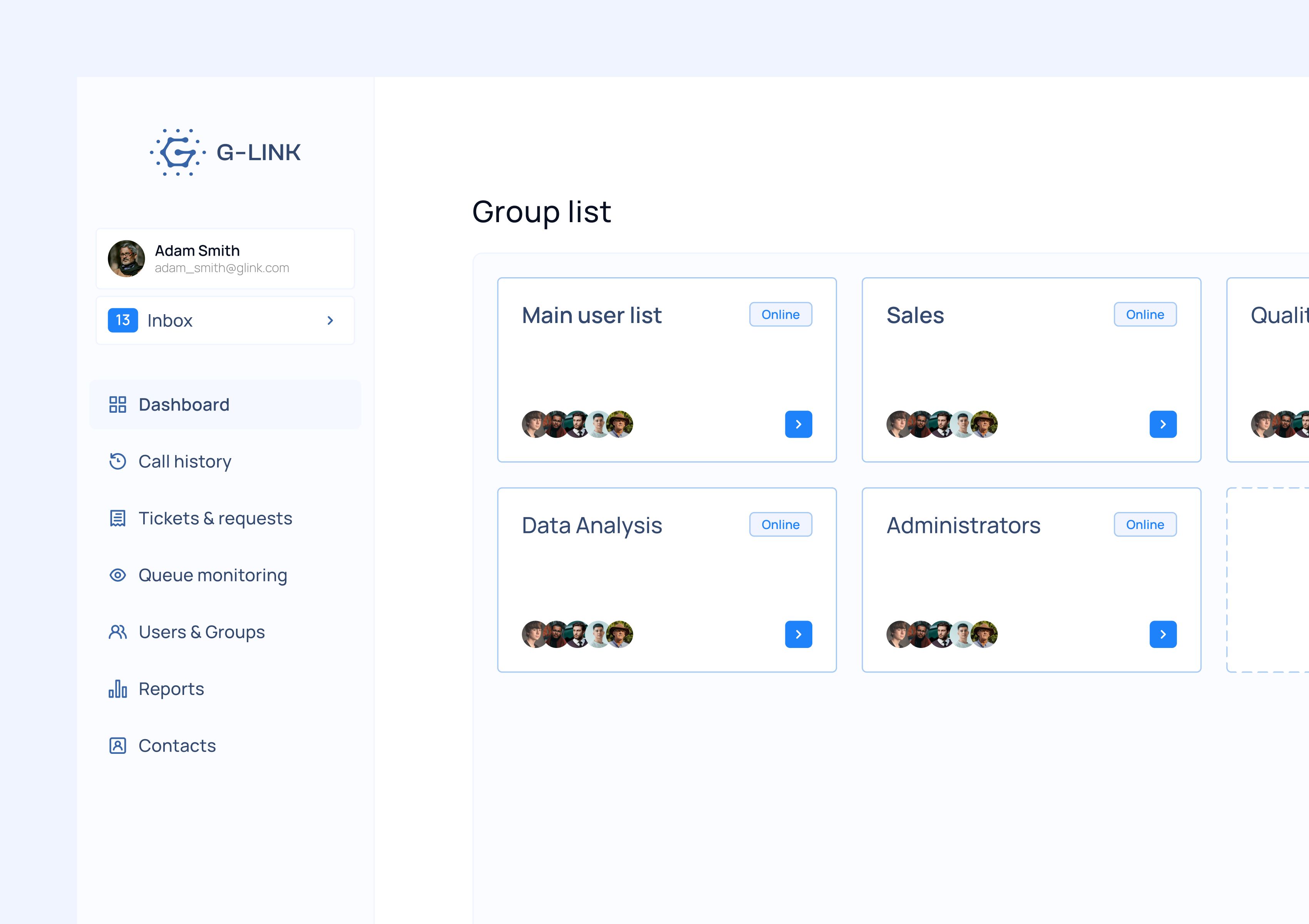
G-link user and group management screen showing group cards, online statuses, and navigation elements.
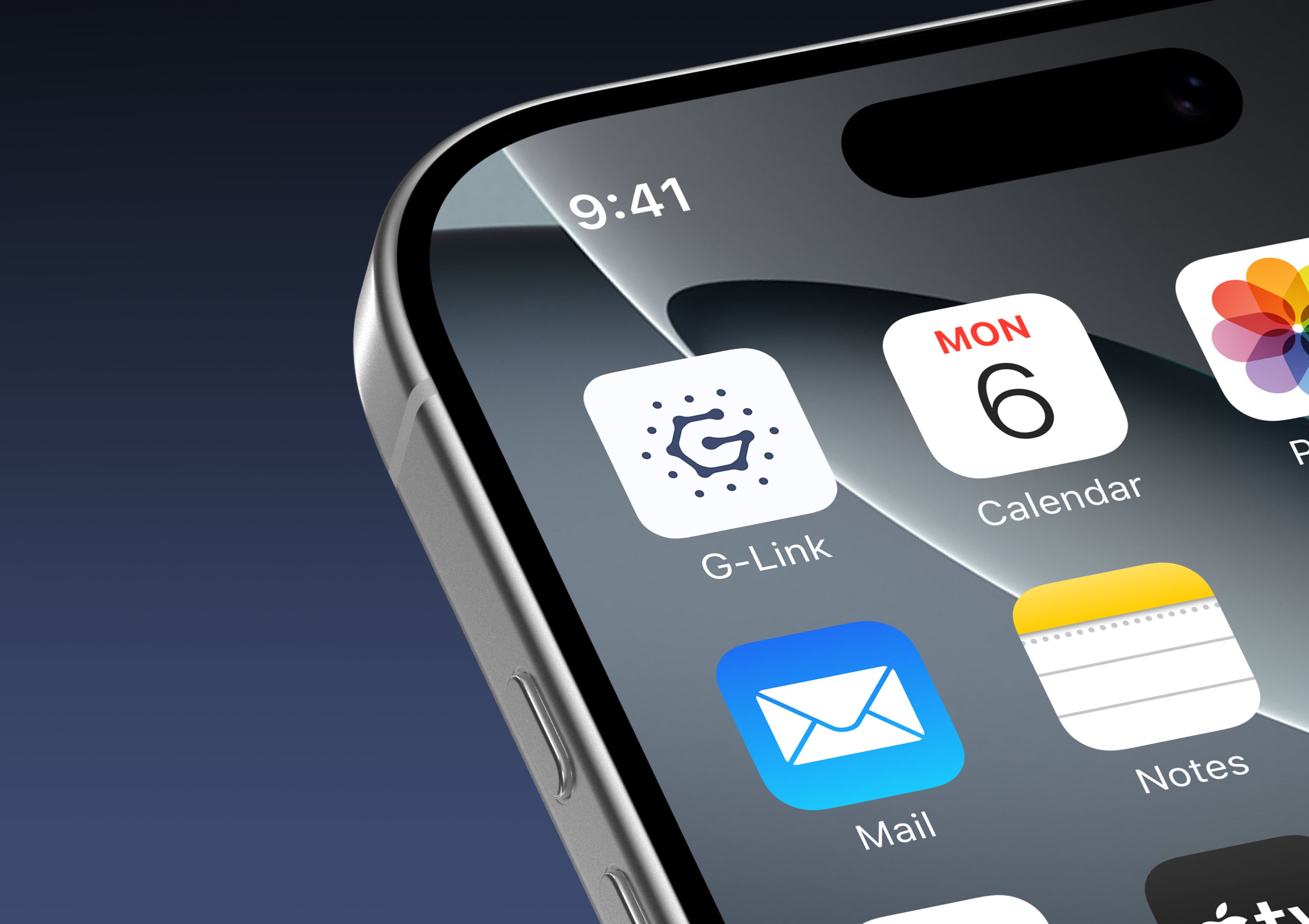
G-link application icon displayed on a smartphone home screen.
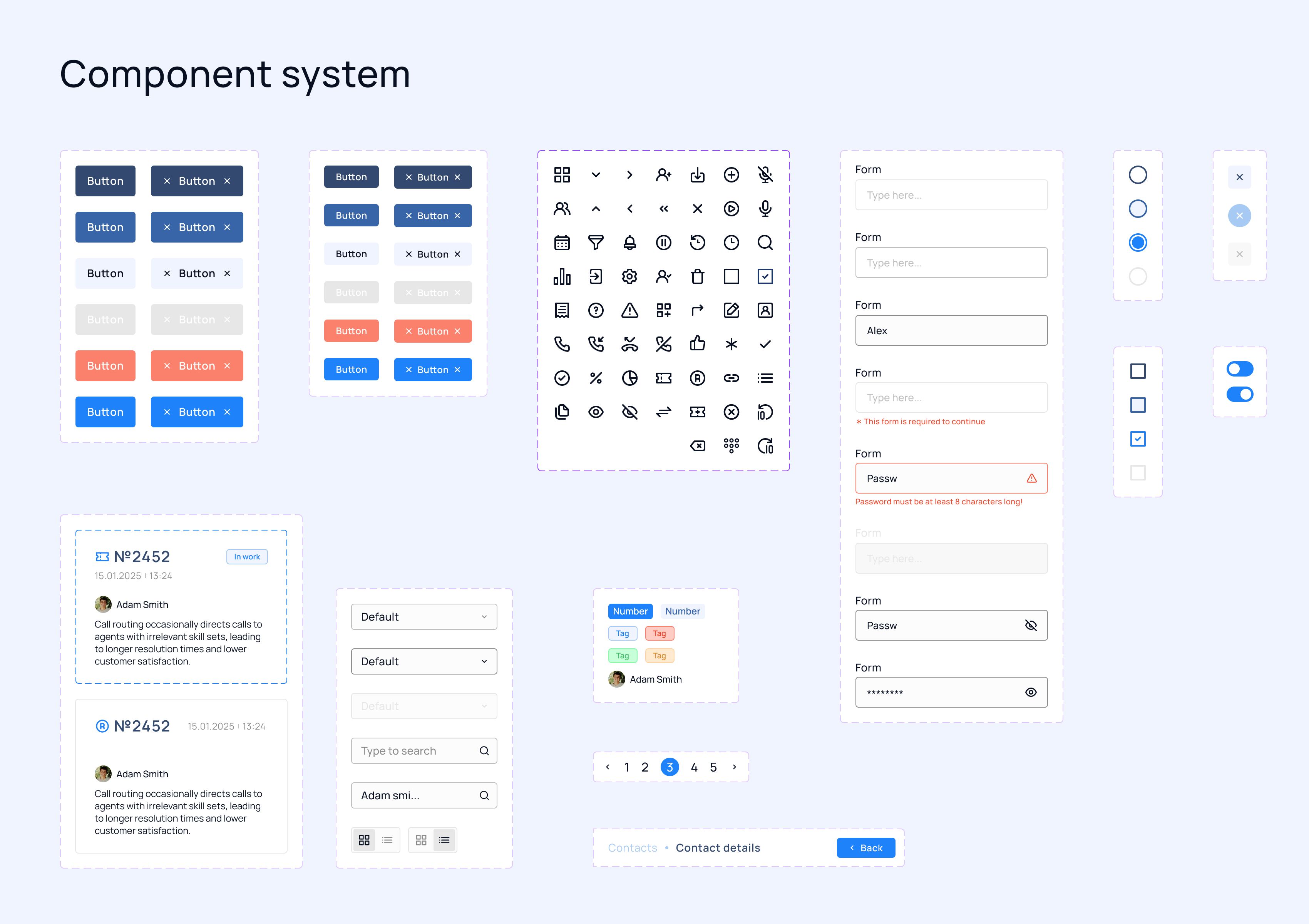
Set of G-link UI components including buttons, icons, forms, tags, pagination, cards, and input states.
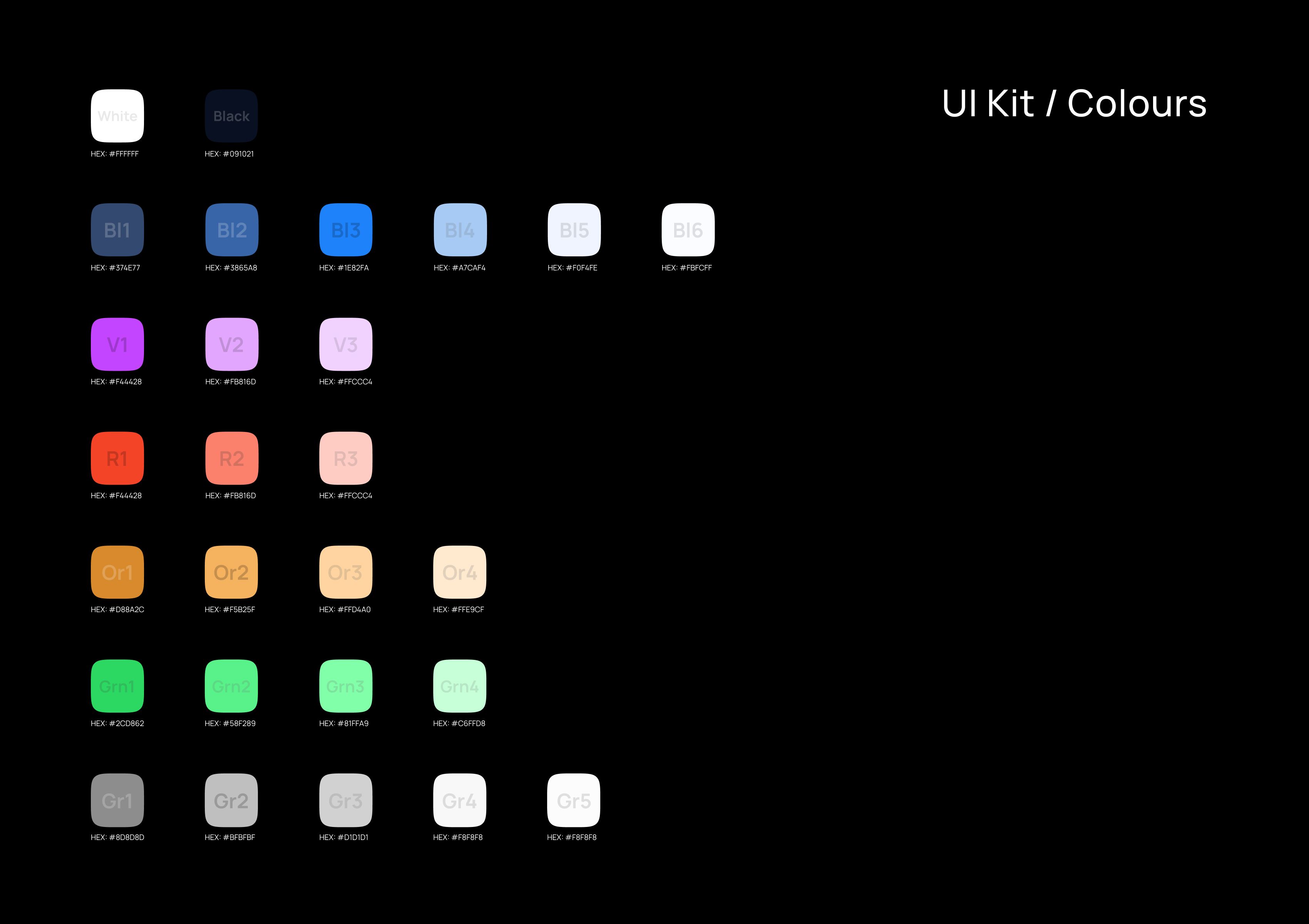
G-link interface colour palette showing primary, secondary, semantic, and grayscale tones with HEX values.
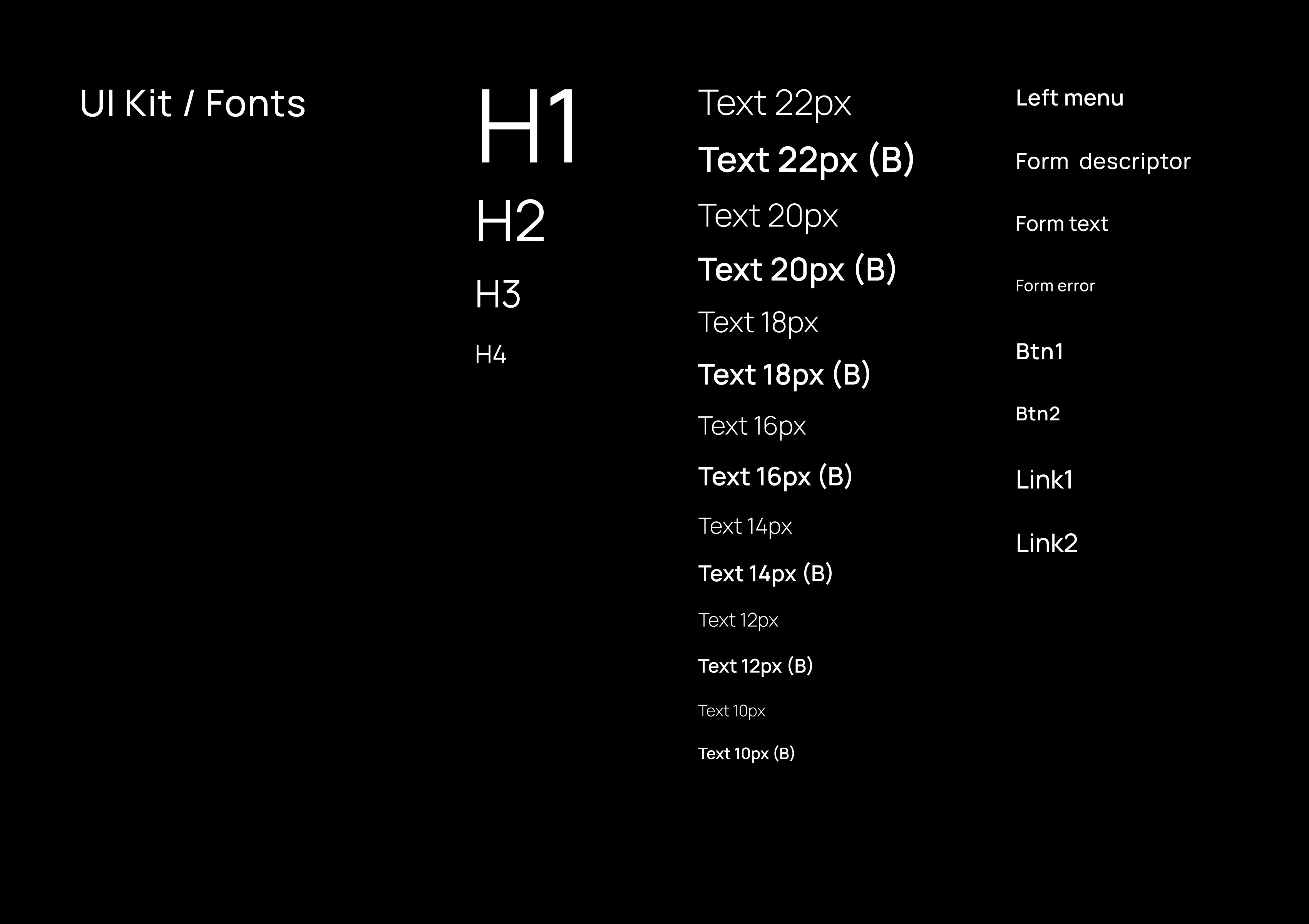
Typography system of the G-link UI Kit displaying heading styles, text sizes, and interface font roles.
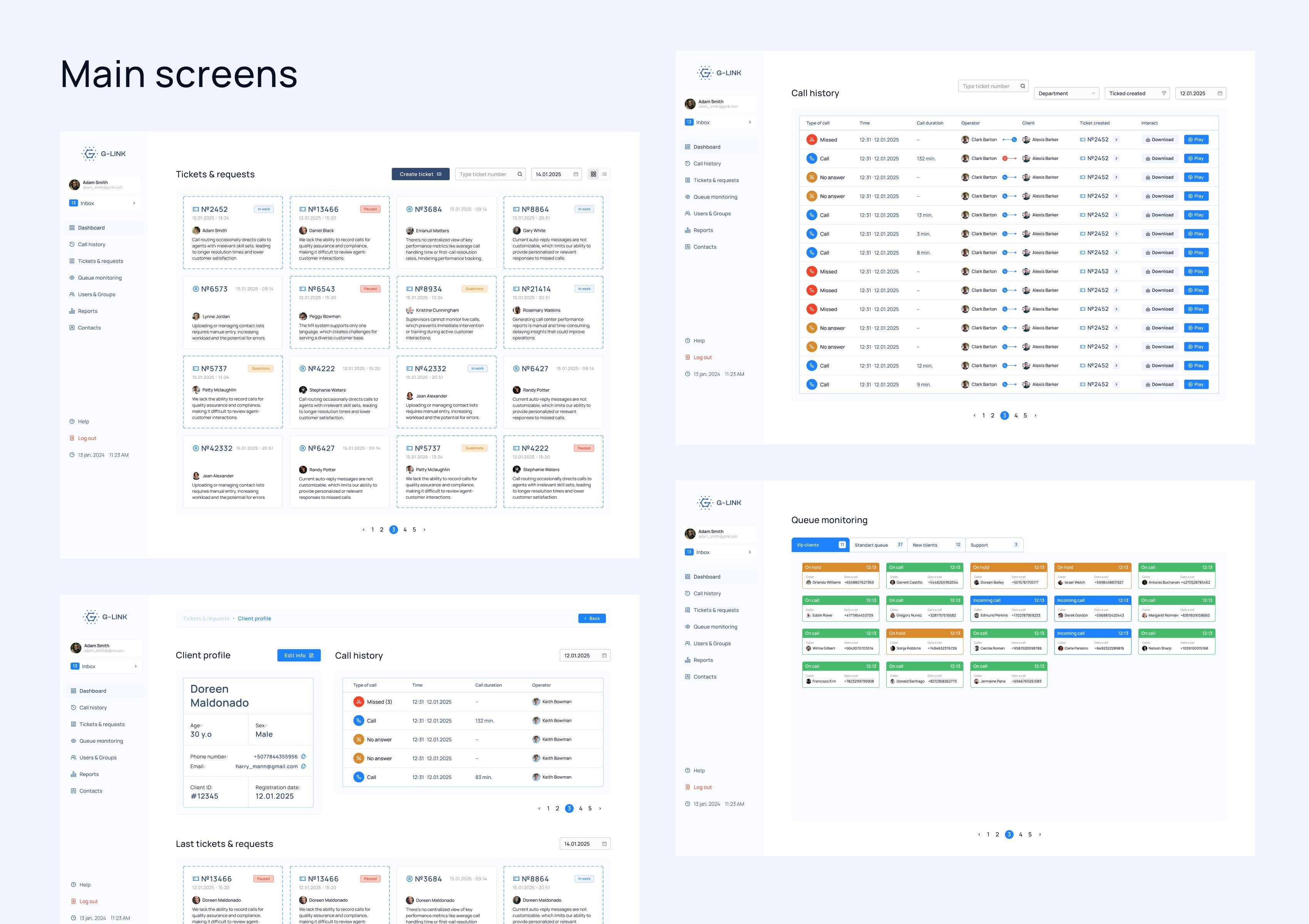
Main G-link interface screens including tickets and requests grid, call history table, queue monitoring board, and client profile view.
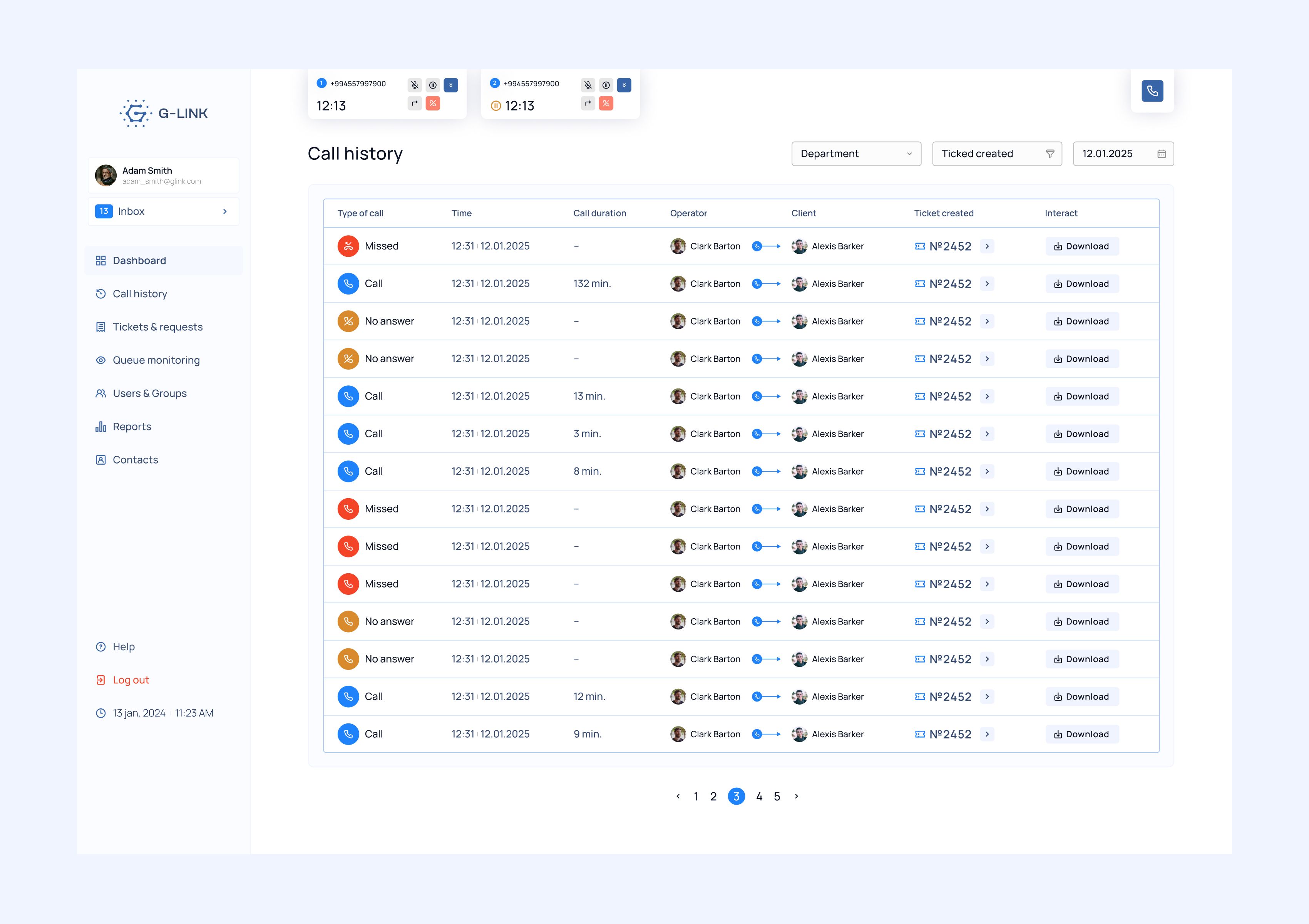
Full G-link call history interface displaying call types, timestamps, operators, clients, and ticket links.
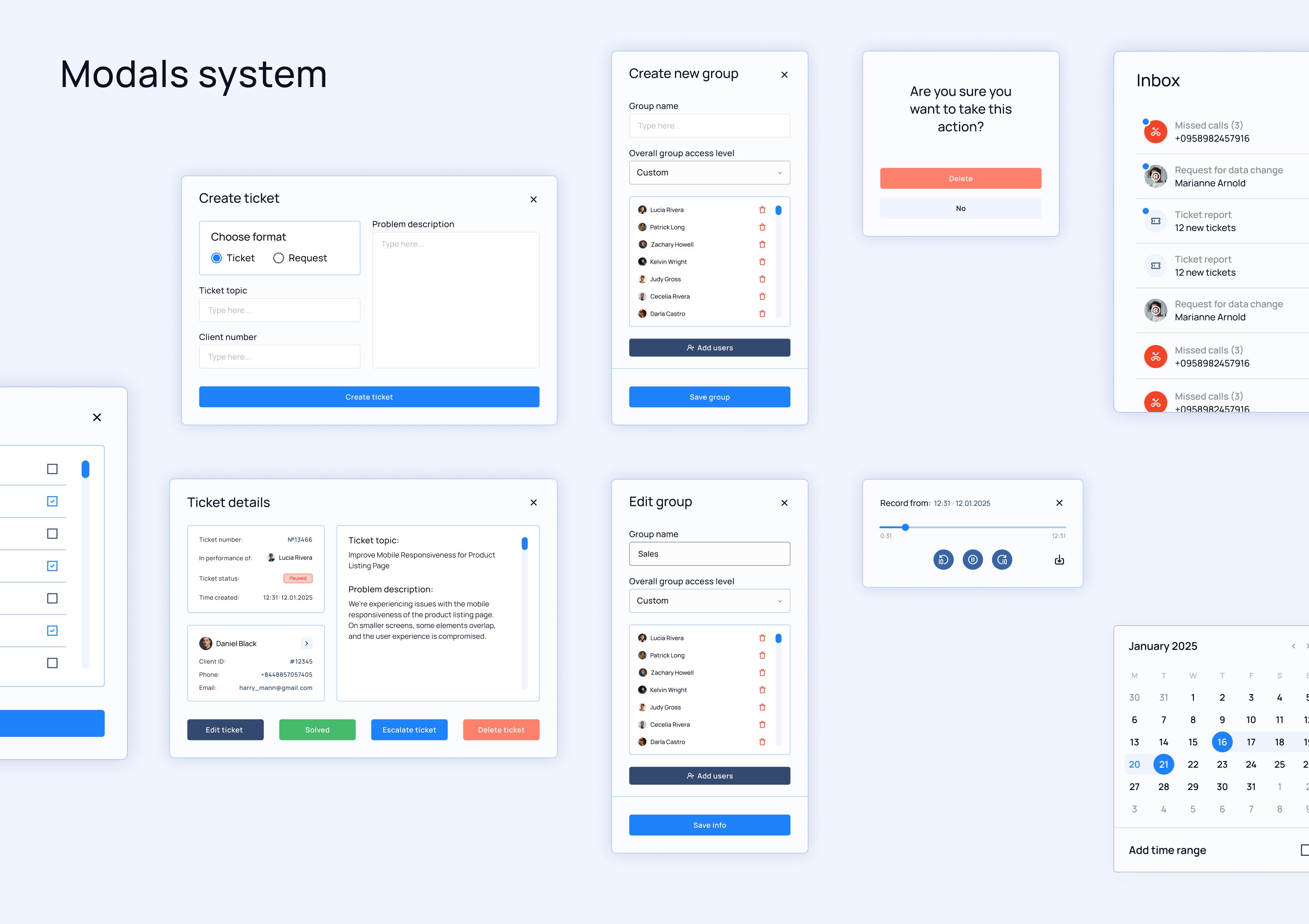
G-link modal windows including ticket creation, group management, confirmation prompts, ticket details, audio record controls, and date picker.
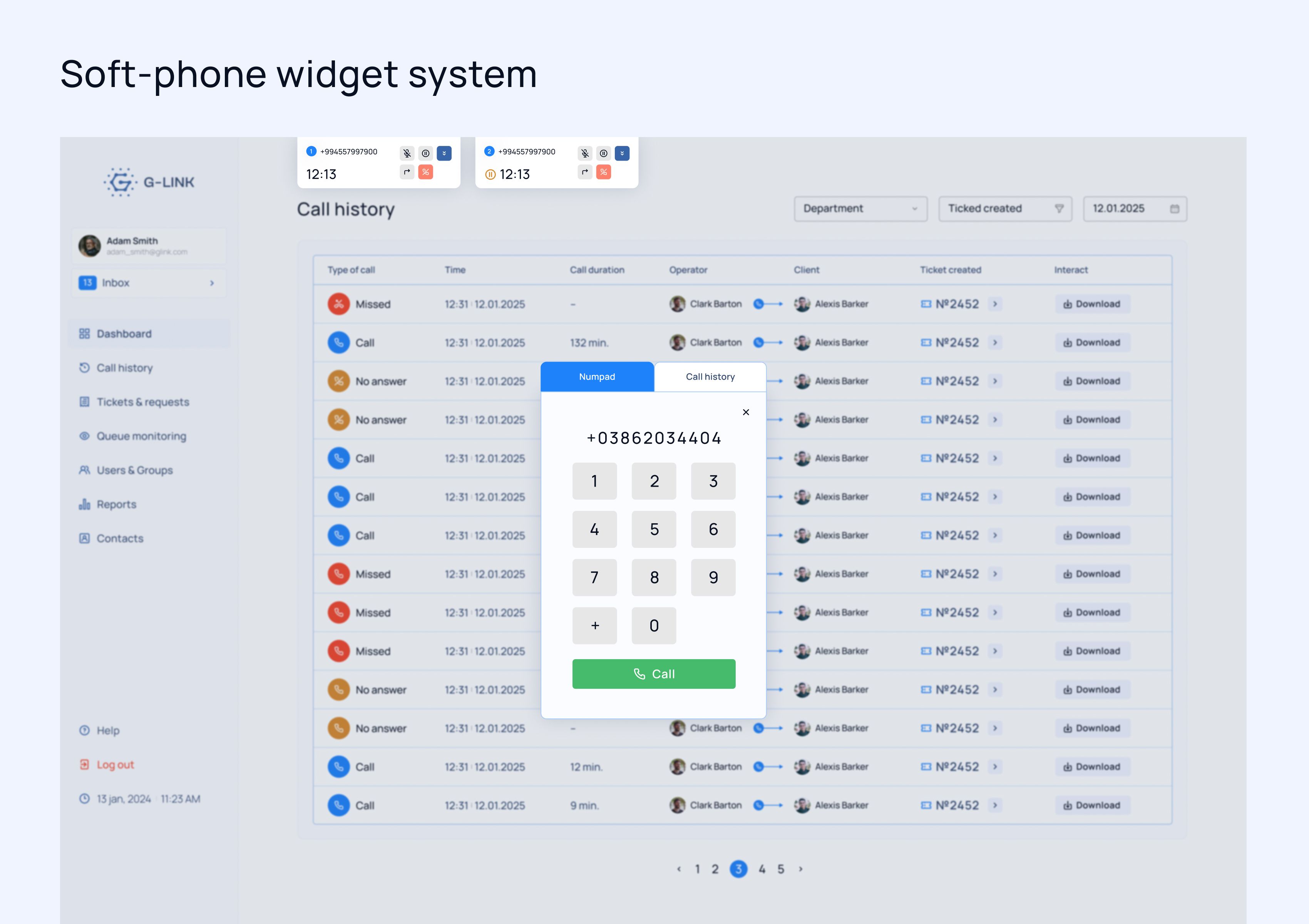
Soft-phone widget displayed over the G-link call history interface, showing numpad and call history tabs.
Soft-phone interface states showing call handling views, numpad input, call history panel, forwarding options, and ticket creation modals.

The delivered MVP included a multi-level workflow logic, 30+ core screens, 20+ modal scenarios, and a state-rich communication widget. Over 30 operational scenarios across different permission levels were tested to refine flow clarity and reduce friction. The resulting system provides a structured, efficient environment for call-center teams and a reliable foundation for future product growth.
The delivered MVP included a multi-level workflow logic, 30+ core screens, 20+ modal scenarios, and a state-rich communication widget. Over 30 operational scenarios across different permission levels were tested to refine flow clarity and reduce friction. The resulting system provides a structured, efficient environment for call-center teams and a reliable foundation for future product growth.
Blake Laboratory 2025

Blake Laboratory 2025

Blake Laboratory 2025